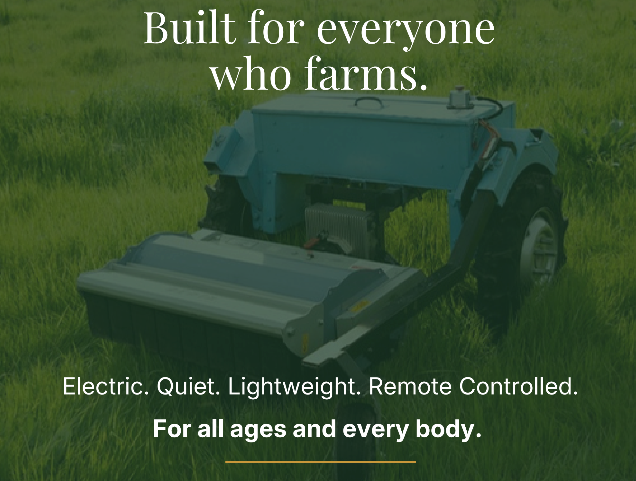
The future of farming is changing quietly but powerfully. Across the world, growers are beginning to shift away from diesel-powered machinery toward clean, efficient electric tractors. This isn’t a passing trend, it’s a practical transformation toward sustainability, driven by the rising costs of fuel, the need to protect soil health, and the urgency of reducing carbon emissions.
At Renewables.com, we believe innovation and environmental responsibility can work hand in hand. Our range of electric tractors for small farms is designed to help farmers cut fuel dependency, lower maintenance costs, and cultivate land more responsibly. These zero-emission farm tractors show that sustainability and productivity can coexist without compromise.
A New Era of Farming
Agriculture has long relied on diesel engines to power tractors and field equipment. While effective, they come with hidden costs: fuel expenses, noise, and environmental pollution. The electric tractor changes that equation entirely.
Powered by rechargeable batteries and often paired with solar charging systems, these machines operate quietly and efficiently, the Renewables e2T is built exactly on this principle, producing no emissions during use. For small acreage farms, that means cleaner air, lower operational costs, and a reduced carbon footprint—all while maintaining the strength and reliability modern farming requires.
The transition to renewable-energy farm machinery isn’t only about meeting environmental goals; it’s about practical benefits. Electric tractors are easier to maintain, have fewer moving parts, and deliver consistent torque instantly ideal for repetitive or precision tasks like cultivating, mowing, or hauling.
Why Small Farms Lead the Change
While large agribusinesses are beginning to test clean energy equipment, small farms are leading adoption. Their scale allows for faster integration of new technology and renewable energy sources.
For family-owned or community-based farms, a battery-powered farm tractor is a cost-saving investment. It can charge from solar panels during off-hours and operate for hours without refueling. Farmers avoid volatile fuel prices and gain independence from diesel supply chains.
Beyond cost savings, electric tractors are soil-health-friendly. Traditional engines compact soil and release exhaust directly into the ground layer, which can harm beneficial microorganisms. In contrast, electric models minimize vibration and emit no pollutants, preserving delicate soil ecosystems that improve yield over time.
Performance and Practical Applications
Modern electric tractors can perform almost every task a conventional tractor handles without the drawbacks of exhaust, vibration, and fuel noise. Farmers use them for:
- Tillage and cultivation: Ideal for precision soil work on smaller fields.
- Seeding and planting: Smooth torque control prevents soil disturbance.
- Weeding and mowing: Quiet operation allows work during early or late hours near residential areas.
- Hauling and transport: Strong electric motors handle loads efficiently.
The solar-charged electric tractor in particular offers unmatched versatility. When combined with renewable energy infrastructure, it can operate nearly carbon-neutral. It’s also automation-ready, capable of integrating with digital tools and sensors that optimize path planning and resource use.
At Renewables.com, our electric tractors are built to handle the variety of tasks required on diversified farms. Whether you’re managing orchards, vineyards, or small vegetable plots, the goal is the same maximize efficiency while minimizing impact.
Lower Maintenance, Higher Reliability
Farmers often worry that new technology means more complexity, but electric tractors are actually simpler to maintain. Unlike diesel engines, there are no oil changes, fuel filters, or exhaust systems to service. Routine maintenance focuses on checking electrical components, batteries, and tires.
This simplicity translates into less downtime and fewer repairs. Batteries last thousands of cycles, and most models allow for easy swapping or modular upgrades. Over the life of the tractor, these savings often offset the initial purchase cost.
And because electric tractors operate with fewer mechanical parts, they’re quieter, which reduces operator fatigue and improves safety awareness in the field.
Environmental and Community Benefits
Every time a farmer switches to a diesel-free agricultural tractor, emissions are eliminated from both the field and the surrounding community. Reduced engine noise also means less disturbance for neighbors and wildlife.
Electric tractors play a meaningful role in the global effort to mitigate climate change. By replacing just one diesel tractor, a farm can prevent tons of CO₂ from entering the atmosphere annually. For regions dependent on agriculture, the combined effect of widespread adoption can be transformative.
Communities also benefit from cleaner air, reduced noise, and the growth of local renewable-energy infrastructure that supports farm operations.
Integration with Smart Farming
The next step in agricultural evolution is automation and electric tractors are built for it. Equipped with sensors, GPS guidance, and data-tracking systems, they’re compatible with farm-automation-ready software.
Farmers can monitor soil conditions, adjust routes, and optimize energy use all through digital tools. These capabilities enhance precision, reduce wasted effort, and ensure every battery charge contributes directly to productive work.
For example, a farmer using solar panels to charge their tractor can track how much sunlight contributes to daily operations. Over time, this data can guide energy planning and equipment scheduling, creating a fully self-sustaining system.
Challenges and the Road Ahead
No technology shift happens overnight. Some farmers still hesitate due to concerns about battery range or charging infrastructure. However, steady advances in battery density and fast-charging technology are closing those gaps rapidly.
Current electric tractors can easily manage a full workday on one charge, and portable solar charging units are becoming common. Manufacturers like Renewables.com are also working to make long-duration batteries and hybrid systems accessible, further extending runtime and versatility.
As more regions introduce tax incentives and rebates for sustainable farming equipment, electric tractors will continue to grow in accessibility and affordability.
Key Takeaways
- Electric tractors reduce emissions and reliance on fossil fuels.
- Maintenance is minimal, cutting downtime and costs.
- Solar-charging options make operations cleaner and more affordable.
- Automation-ready designs enhance precision and productivity.
- Soil-friendly operation protects the ecosystem that supports every harvest.
Pro Tip
When investing in a new tractor, evaluate your farm’s energy setup. Pairing solar panels with your electric tractor not only lowers operating costs but can turn your entire operation into a closed-loop renewable system energy produced on-site powers the very machines that sustain it.
A Sustainable Future for Every Farmer
Electric tractors are not just machines they’re symbols of what the future of farming can be: efficient, quiet, soil-friendly, and sustainable. For small farms looking to modernize responsibly, they provide a bridge between tradition and technology.
At Renewables.com, our mission is to help farmers transition smoothly to clean power while maintaining productivity and reliability. By investing in zero-emission, solar-charged electric tractors, farmers are investing in their land, their communities, and the future of agriculture itself.