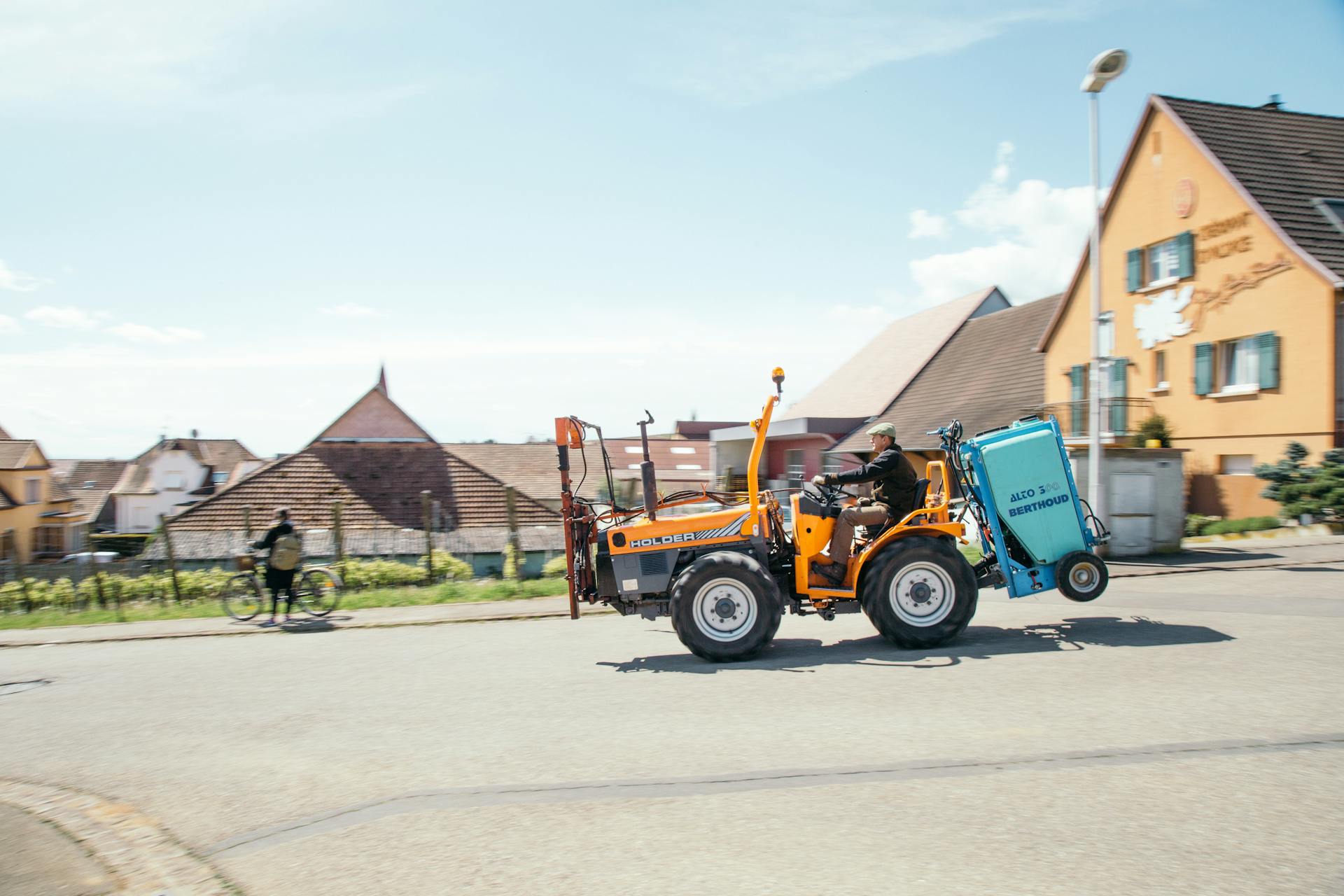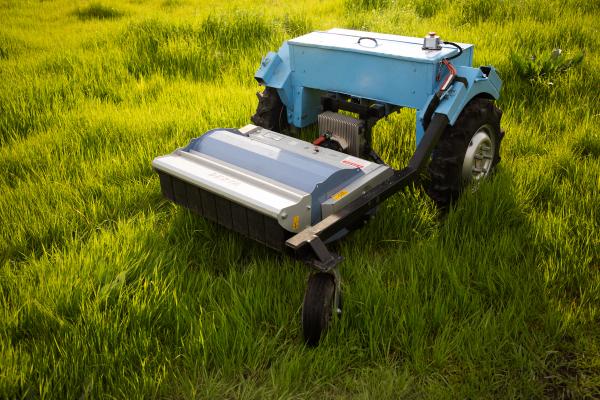
Electric farm equipment is any machine or tool used in farming that runs on an electric motor powered by a battery, a grid connection or solar panels, instead of a gasoline or diesel engine. The category is much wider than tractors. It covers utility vehicles that move loads, mowers that manage grass and cover crops, handheld tools such as trimmers and pruners, and the power sources that keep all of it running. For a grower on 1 to 10 acres, the useful question is not whether a machine is electric. It is which jobs on your farm suit battery power right now.
This guide walks through the main categories of electric farm machinery, what each one does, and how battery and solar charging differ in practice. Renewables makes one product in this space, the Renewables e2T electric two-wheel tractor, so the other categories below are described in general terms rather than tied to any particular brand or model.
What Is Electric Farm Equipment?
An electric machine uses a motor and a battery pack in place of a combustion engine. Electric motors deliver torque immediately, so there is no need to rev up before a load. There is no fuel to store, no exhaust at the machine, and fewer moving parts to service. Maintenance shifts away from oil changes and filters and toward battery care, tires and the tools you attach.
The tradeoff is energy storage. A tank of diesel holds more usable energy than a battery of the same weight, and refuelling takes minutes while charging takes hours. That is why electric agricultural equipment tends to suit short, repeated tasks close to a power source, rather than full day work far from the barn.
Which Farm Jobs Can Electric Equipment Do Today?
Most small farm work falls into a handful of repeating jobs. Here is what each category of equipment handles.
Walk Behind and Compact Tractors
These do soil working jobs: bed preparation, cultivation, light tillage and pulling implements. A two wheel tractor can suit narrow beds and greenhouse work where space is limited. Quick change attachments let one power unit run several tools, which matters when storage space and budget are tight.
Electric Utility Vehicles
A utility vehicle carries people, crates, tools and inputs across the property. On a market garden, that is harvest totes to the wash station and seedlings back out to the field. Battery models run quietly, and trips that return to a charger each day fit the way these vehicles are used.
Electric Mowers and Trimmers
Electric mowers and trimmers are worth comparing when you plan grass, pathway or field edge maintenance. Check local availability, stated run time and the work your site needs before buying. Growers also use mowers to knock down cover crops.
Handheld Electric Tools
Cordless pruners, chainsaws, blowers, hedge trimmers and drills are common. For orchard and perennial work, powered pruners reduce the hand effort of repeated cuts. Check whether a tool runs on a battery platform you already own before adding another charger and pack.
Power Sources and Fixed Equipment
Irrigation pumps, greenhouse fans, propagation mats and wash station equipment have run on electricity for a long time. They draw from the same circuits and solar capacity as your machines, so count them when you plan power. The energy side also includes wall outlets, dedicated chargers, portable battery stations and solar arrays. Field work often happens away from buildings, so charging location is a real planning question.
| Category | Main job | Check before buying |
|---|---|---|
| Two wheel tractor | Bed prep, cultivation, pulling tools | Bed width and distance to a charger |
| Utility vehicle | Moving crates, tools and people | Daily trip length and load |
| Mower or trimmer | Grass, pathways, cover crops | Run time against session length |
| Handheld tools | Pruning, cutting, cleanup | Battery compatibility and spare packs |
| Power source | Charging batteries and running fixed gear | Available circuits and charging times |
What Is the Difference Between Battery Electric and Solar Powered Equipment?
Battery electric describes how a mobile machine uses stored electricity. Solar powered describes a possible source of that electricity. For the e2T, Renewables describes an optional PV canopy and a solar charging path.
There are two common solar setups:
- A fixed array on a barn, shed or ground mount that charges batteries through your existing electrical system.
- Panels mounted on the machine itself, often as a canopy.
These are different setups, not interchangeable ones. Before relying on either, compare the equipment's stated charging requirements with your solar system and your work schedule. The Renewables PV canopy and solar charging option are described on the solar tractor page.
What Should a Small Farm Buy First?
Work through your own operation before you compare machines. This order keeps the decision grounded in real hours rather than specifications.
- List your jobs by hours. Write down every recurring task for a season and estimate the hours each one takes.
- Mark the painful ones. Note which jobs are loud, physically hard, done near people or animals, or stuck waiting on borrowed equipment.
- Check the distance to power. Work within reach of a charger is the easiest to electrify first.
- Match the machine to the top job. If bed preparation or cultivation takes the most time, compare two wheel options before buying a larger machine.
- Confirm the attachments and the charging plan. Check which implements fit a power unit, then decide where the machine will charge.
Budget and physical access matter too, and our post on who gets to farm and accessible equipment looks at that side of the decision.
What Are the Limits of Electric Farm Equipment?
Run time is the first limit. A battery works for a set number of hours and then needs charging, and heavy loads such as deep tillage drain it faster than light passes.
Weather and buildings come next. Winter conditions can add planning questions, so ask the manufacturer how its equipment is intended to be stored, charged and used in the temperatures on your farm. Older farm buildings may also need electrical upgrades before you can charge several machines at once.
Support is the last one. Parts and service vary by equipment category and supplier. Ask about local service, replacement parts and warranty terms before you buy.
Frequently Asked Questions
Yes, when the machine's stated capacity and attachments fit the job. Electric motors deliver torque immediately, which suits cultivation, mowing and hauling. Match the expected run time, load limits and charging plan to the hours your tasks actually require.
Running costs depend on your electricity rate, fuel prices, hours worked and maintenance habits, so there is no single figure that applies to every farm. Compare your own numbers: annual fuel spend, servicing, and the cost of charging at your local rate.
No. Battery equipment can charge from an appropriate electrical supply and charger, so check the manufacturer's charging requirements before you buy. Solar is an optional power source rather than a requirement.
Renewables positions the e2T electric two-wheel tractor for growers working about 1 to 10 acres. For any electric machine, assess the task, the planned run time, the charging requirements and your available power before deciding whether it fits your farm.
Battery life varies by chemistry, temperature, charging habits and how deeply the pack is discharged. Ask each manufacturer for its stated cycle life and warranty terms, and compare those terms across the machines you are considering.
Some tool systems use one battery across several handheld tools, but compatibility varies between ranges and brands. Check the manufacturer's compatibility list before assuming a battery you already own will fit a new tool or machine.
Choosing Electric Farm Equipment for Your Acreage
Start with the jobs that take the most hours and sit closest to power. Check run time against the length of each task, confirm which attachments fit, and ask about parts and service before you commit.
For growers comparing electric farm equipment for 1 to 10 acres, Renewables is a Santa Rosa, California maker of the Renewables e2T electric two-wheel tractor. Reserve your e2T or email info@renewables.com with your questions at renewables.com.