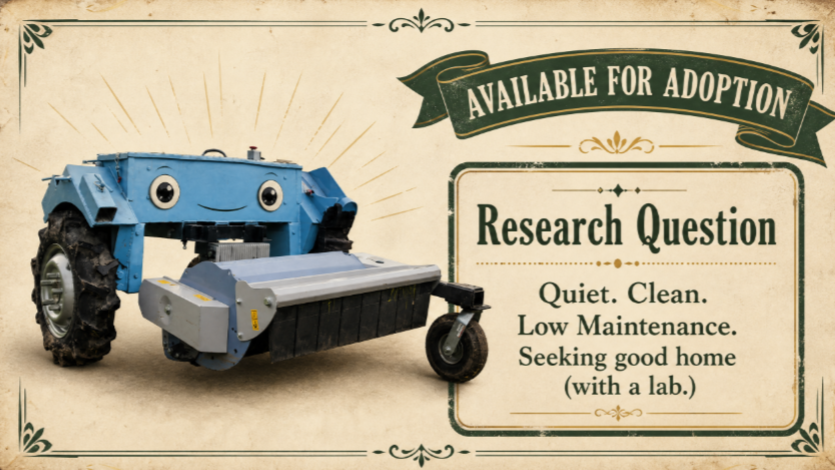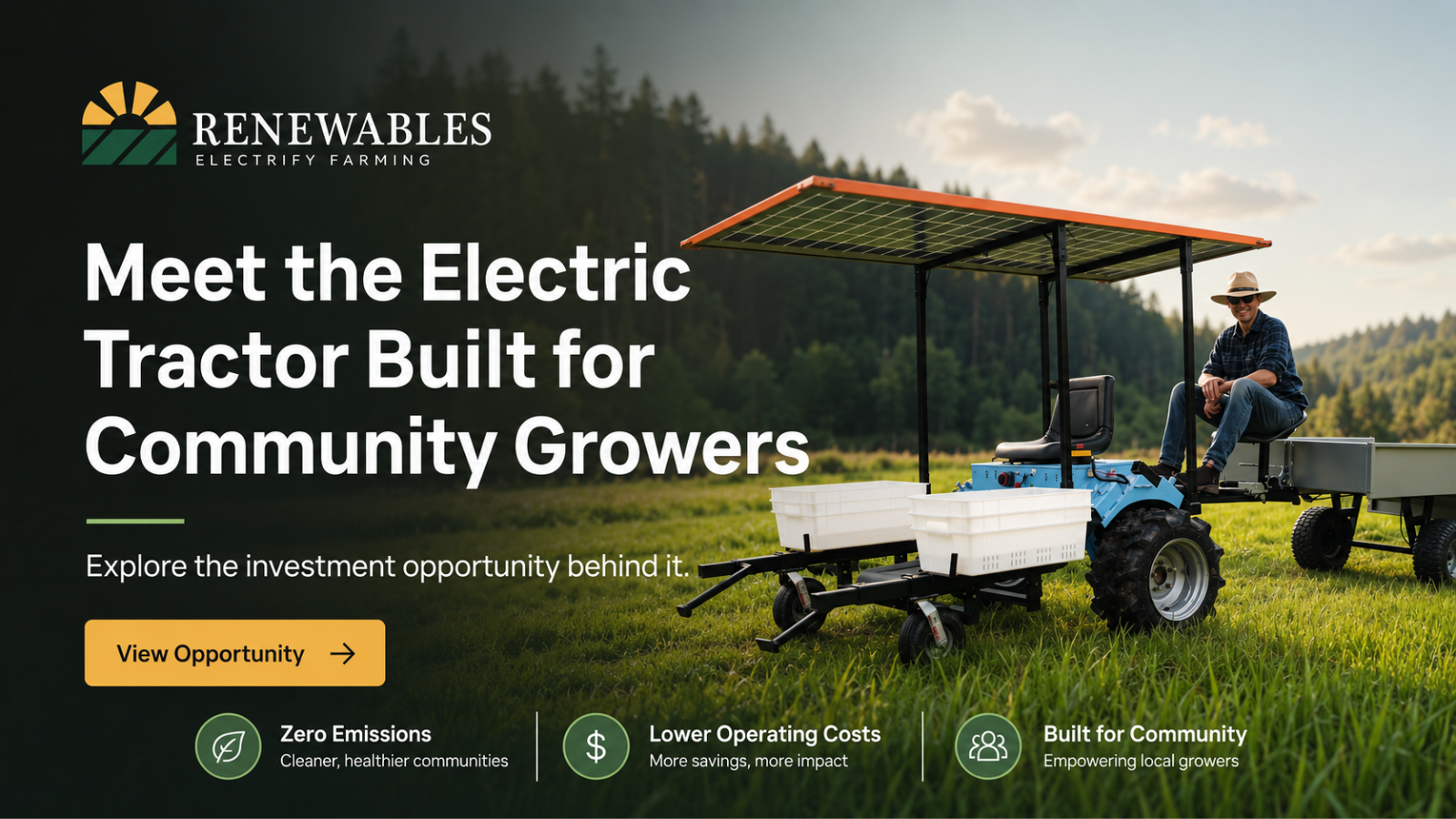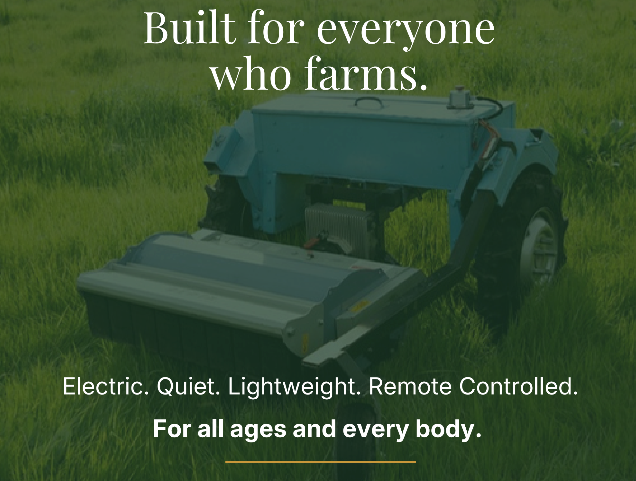
Every place the team takes the e2T, the farmers want one.
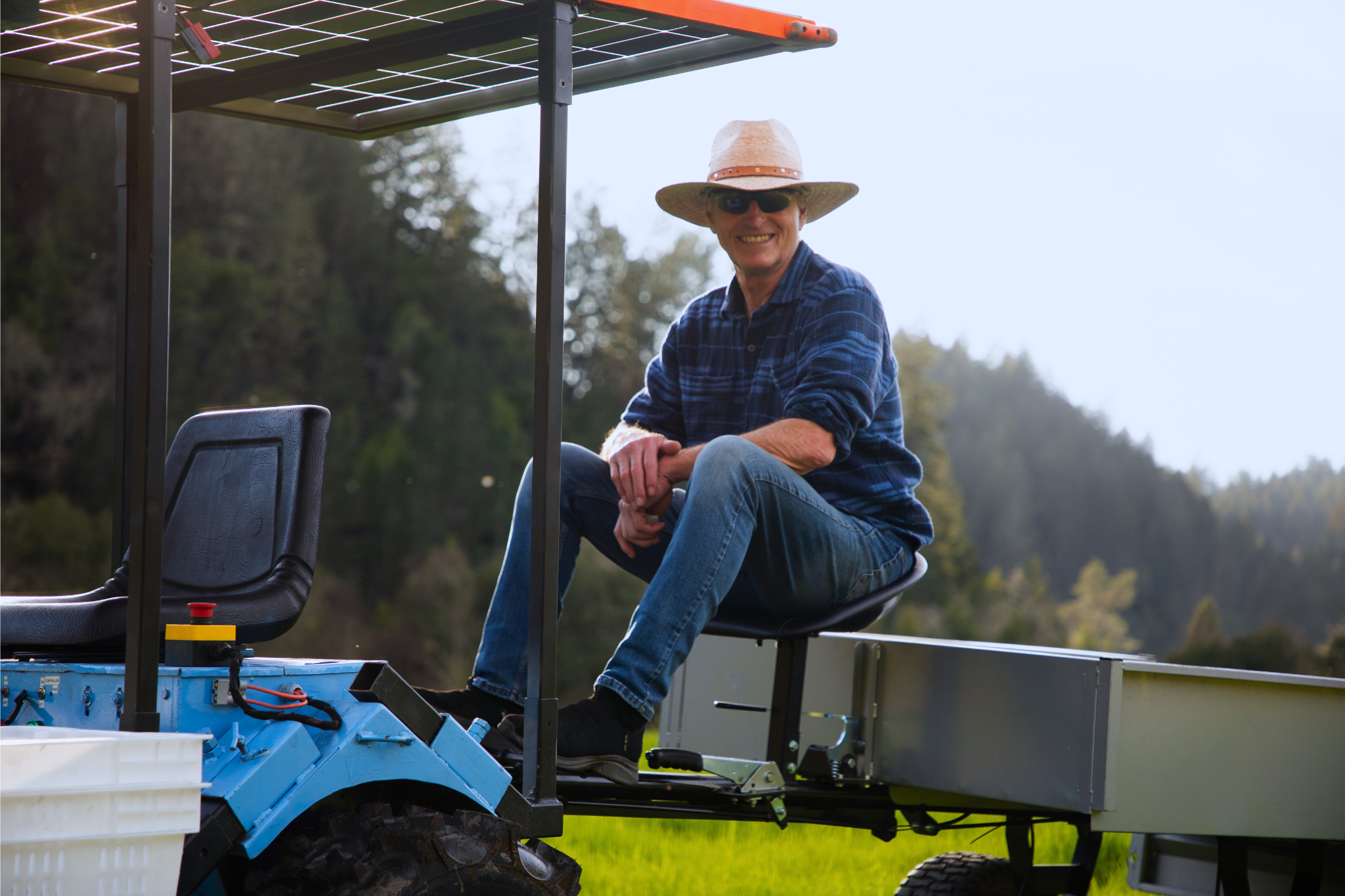
Steve Heckeroth has spent decades looking for alternatives to fossil fuels. He trained as an architect, designed passive-solar homes, earned six patents on solar roofing, built electric cars back when the only option was a half-ton of lead-acid batteries, and then put thirty years into electric tractors. In the recent investor webinar, the founder and CEO of Renewables showed where that work has landed: the e2T, a remote-controlled, solar-powered tractor built for the farms that most equipment makers overlook.
If you want the short version of how he got here, watch this first: Meet the Inventor. It’s only two minutes, and it tells the county-fair story that turned an electric-car builder into a tractor builder.
Here are four parts of the webinar worth your attention if you are weighing the investment.
The market is larger and emptier than it looks
There are roughly 600 million farms worldwide and about 25 million tractors. Run that math, and you find the majority of farms still depend on hand tools. In the United States, growers working modest acreage produce more than 60 percent of the food, and most of them are too small for the mega-tractors built for industrial corn and soy.
Heckeroth put the combined global opportunity for farm equipment and land maintenance above $300 billion. The mowing side alone is bigger than people assume. As he noted, the country has more lawn than cropland, and one gas mower emits about as much pollution as 40 cars over the same stretch of work.
There is also agrivoltaics, where crops grow underneath solar panels. Arrays built tall enough to clear conventional tractors cost roughly twice as much per watt to install as those built lower. The E2T stands about two and a half feet high, which lets developers build arrays closer to the ground and more cheaply. A second market, opening up underneath the first.
Renewables does not need to dominate any of this. By the company's own cost math, a fraction of one percent of these markets would carry it.
Farmers want the e2T.
Universities are part of that pull. One large university alone sent five separate inquiries, from professors, an administrator, and students. Multiple other UC campuses and several community colleges have raised their hands too, including The Center for Land-Based Learning. These schools train the next generation of growers and have stated goals of moving off diesel. Until now, they have lacked the equipment to do it. Renewables has also drawn recognition from the Community Alliance with Family Farmers with an Innovation Award in 2025, calling the e2T a “game changer.”
The unit economics fit on a napkin
The monthly operating costs for Renewables, Inc. run near $60,000. At 10 tractors a month, Renewables is projected to break even. The company is aiming for 20 a month by the fourth quarter, a pace that by its own projection would put it in the black. Hitting profitability on ten hand-assembled units a month is rare for a hardware startup, and it is the number worth circling.
The e2T assembly is anticipated to take one day when the milestone of 20 units per month is reached, in contrast with the month it took to build the heavier tractors at Heckeroth's previous company. The 8,000-square-foot facility in Santa Rosa could be replicated near each new market, thereby reducing shipping costs as the company expands.
This round funds the jump to production
Renewables sits just short of the point where selling ten units a month is projected to cover the operating cost. To get there, it needs capital to expand operations and complete assembly of the next 50 tractors. The operation is lean, a team of eight people up from three, and it is carrying the cost of the jump from pilot units to steady production. Capital raised in this round could fund that jump. Clear it, and the company's own math says it aims to run on its own revenue from there.
That is the window. A functioning product with paying interest behind it, a checkable path to profit, and a founder who has spent a career getting to this design.
The investment round is open now on Highlander at highlander.ai/renewables. The page carries the deal terms, the offering documents, and a discussion section where you can put questions straight to the team.
Start with the story, then read the numbers: Watch the webinar replay.
RISK DISCLAIMER. When making an investment decision, investors must rely on their own examination of the issuer and the terms of the offering, including the merits and risks involved. Investments on Highlander AI are speculative, illiquid, and involve a high degree of risk, including the possible loss of your investment.