The first time someone mentioned they were farming from a wheelchair, we almost missed it. It was a practical email: remote operation, standard or add-on, grip requirements. That detail came at the end almost as an afterthought. No backstory. Just the information we’d need. We read it, responded, and moved on.
Then more messages came. Veterans returning to farming through USDA programs. Older producers who'd been farming for decades and weren't ready to stop. Smaller-framed operators who'd spent years working with equipment designed for a different type of body. People managing joint conditions, respiratory limitations, sensory sensitivities, injuries that hadn't resolved the way they were supposed to. None of them were asking for anything special. They wanted to know whether this particular tractor would work for them in a way their current equipment didn't.
It turns out that's a lot of people.
Who's Actually Farming
The average age of a U.S. farm producer is 58.1 years, according to the 2022 USDA Census of Agriculture, and farmers 65 and older now account for more than 40 percent of all producers. Women represent 36 percent of producers nationwide, with 58 percent of farms having at least one woman who’s a decision maker. USDA Economic Research Service data puts the share of farmers with a disability at roughly 19 percent, around 395,000 people, with broader estimates reaching as high as two million when the full agricultural workforce is included. Together, these numbers describe most of the people actually working farms.
The Size Factor
Women-operated farms tend to be smaller in acreage than the national average, which means that 36 percent is disproportionately concentrated in exactly the segment that conventional walk-behind equipment has served least well. A machine designed around upper-body strength and strength and height assumptions isn't just an inconvenience for a smaller-framed operator working a diversified two-acre market garden alone: it's a genuine productivity constraint, and in some cases it’s a safety one. Those gaps between the equipment and the users have always been connected, whether the industry acknowledged it or not.
Built for One Kind of Farmer
Conventional walk-behind equipment wasn't designed with any of these challenges specifically in mind. Pull starts. Sustained vibration at the handlebars. Noise levels that regularly exceed safe exposure thresholds. Handle height and leverage built around a particular operator profile. Exhaust at breathing height, season after season. These aren't design flaws exactly; they're what decades of engineering for a general market produced. But for a farmer whose body doesn't fit that profile, their equipment means their work is harder than it has to be.
Where It Starts
The most common entry point into this conversation isn't a dramatic injury or a long-term disability. It's a rotator cuff. Pull-start engines are a known and persistent source of shoulder injuries among farmers, particularly solo operators who are starting equipment multiple times a day across a long season.
The National Farm Medicine Center at Marshfield Clinic, which tracks agricultural injury patterns, consistently identifies musculoskeletal injuries as among the most prevalent in farming; shoulder damage from repetitive pull-starting is a recognized contributor. For a solo farmer managing everything themselves, a shoulder injury that limits overhead reach isn’t just about the pain. It can end a season, or end a career.
What Electric Removes
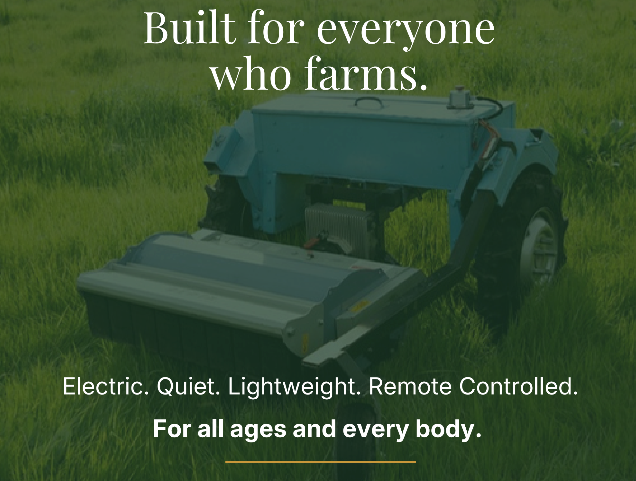
Electric platform design removes some of these challenges by default: No pull start. No hand-arm vibration. Quieter operation. Remote control is a standard feature rather than an accommodation. Simplified controls. No exhaust.
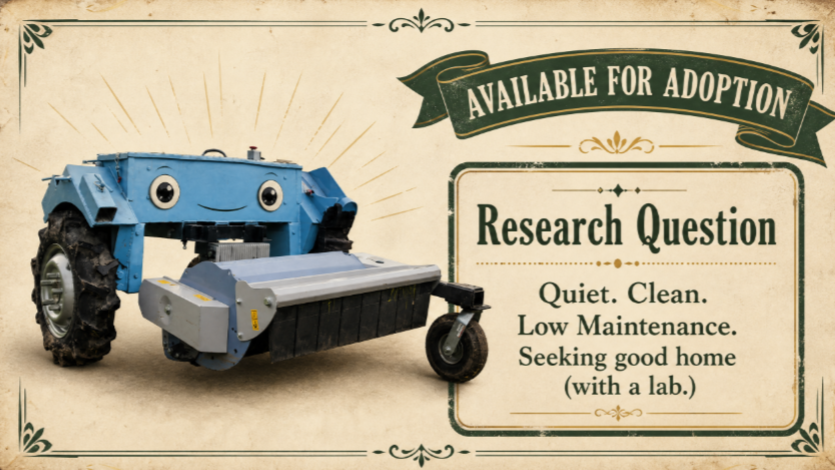
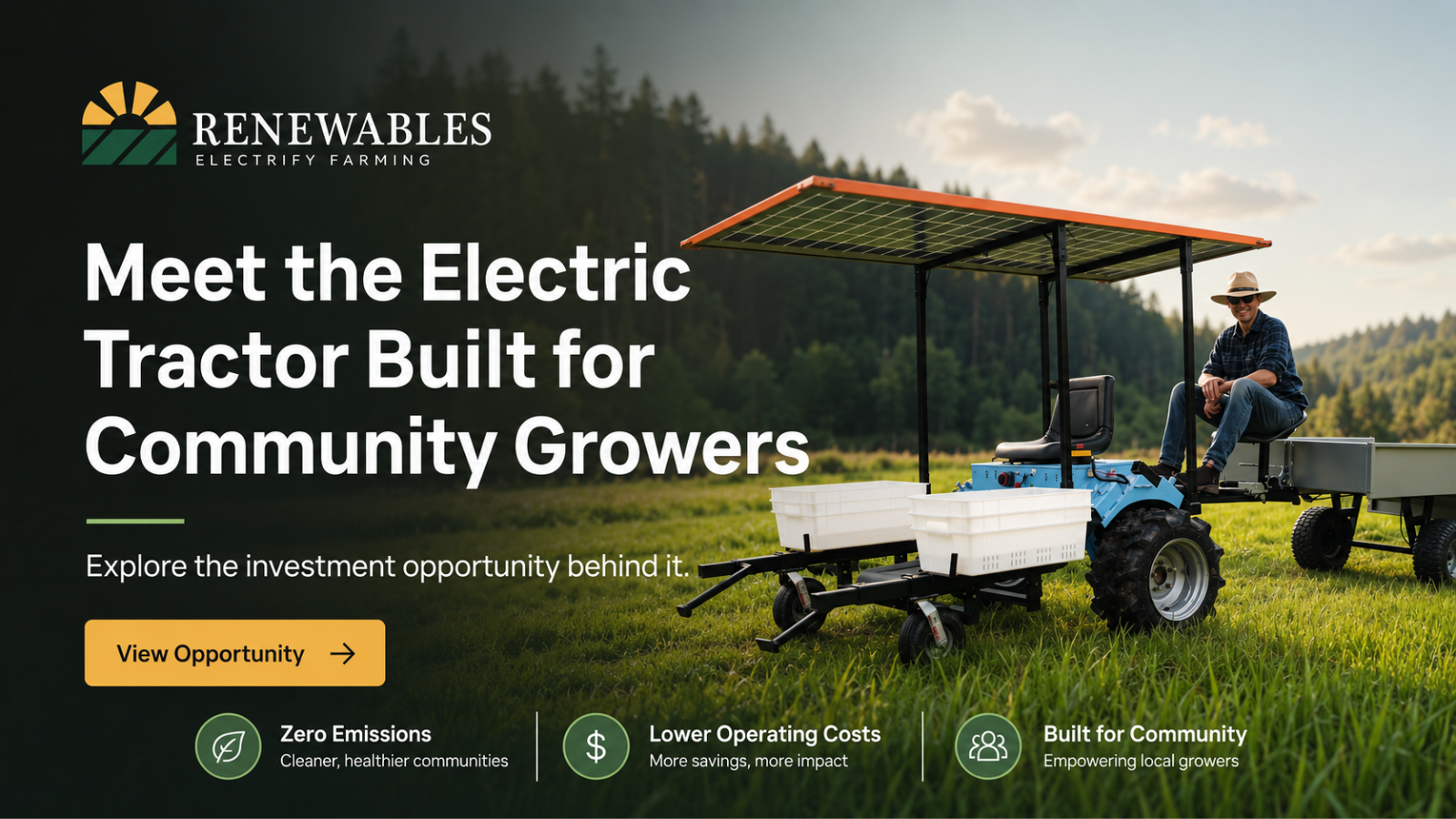
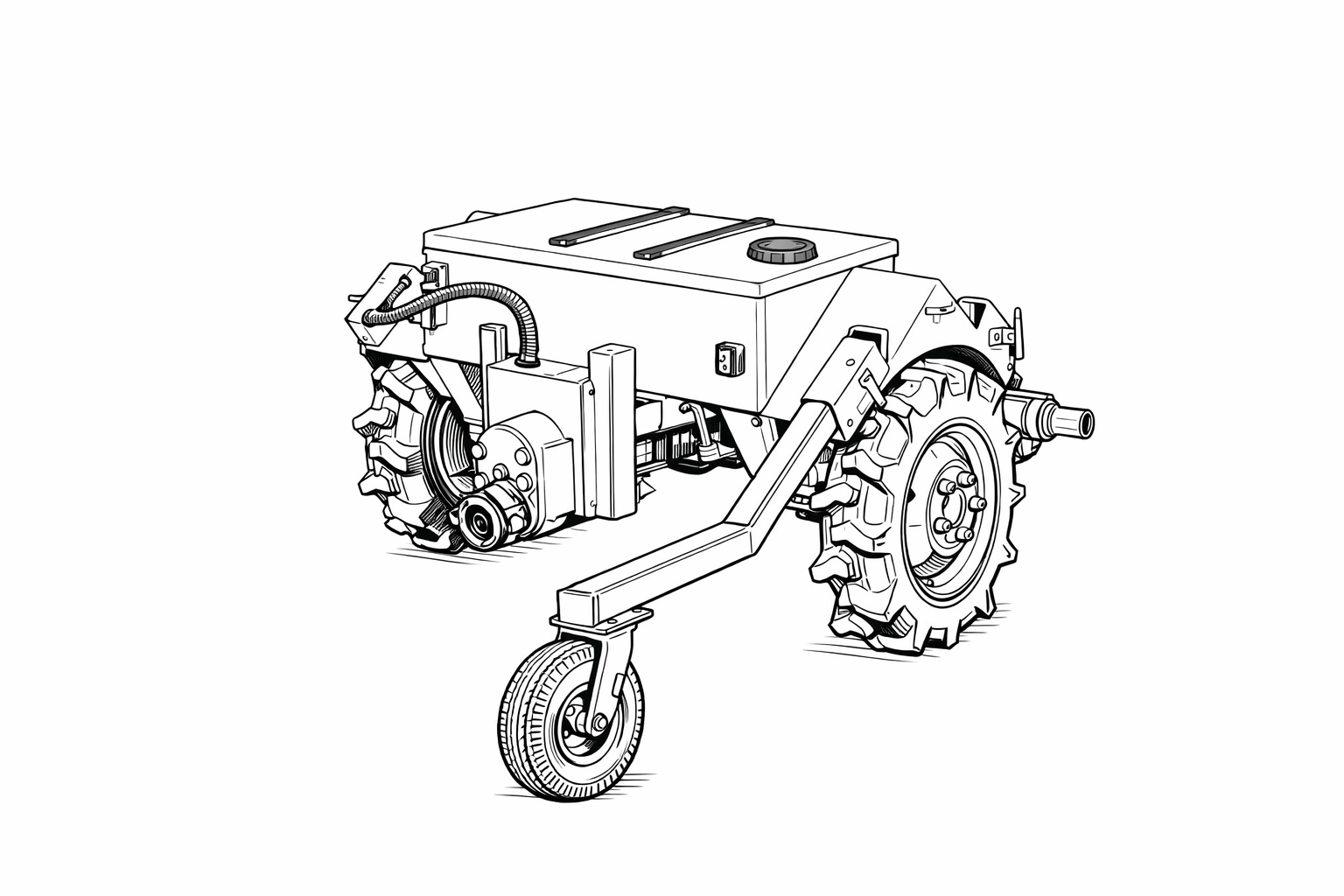
Renewables founder, Steve Heckeroth came to this design with years of experience as a BCS dealer and operator. After decades of designing electric tractors between 25 - 80 horsepower, he turned his attention to smaller, lighter equipment that was easier to operate, to repair, and maintain. The e2T is the result of years of conversations with working farmers.
Farmers are not complainers. When they reach out to say something hasn't been working for them, it's been not working for a long time.
Heckeroth began by envisioning a tractor that worked across a range of ages, body types, and physical abilities. Developing an affordable, low-maintenance machine with lower complexity was one of his stated goals, and while he knew the e2T would remove limitations for some operators, the volume and frequency of messages from people who are specifically citing physical limitations turned out to be much greater than any of us had projected.
Many of these messages were from people who had been adapting for so long that they treated the limitations as normal and expected; it’s been enlightening to hear from so many people who have been working with equipment that hasn’t really been working for them. It’s been encouraging to learn that the e2T can be a real solution.
Beyond the Original Audience
The e2T is currently being evaluated for inclusion in criteria-based databases of assistive farming technologies for producers with disabilities. The unexpected volume of messages has led to conversations with adaptive agriculture groups, veteran programs, extension networks, and funding channels outside the usual ag-tech ecosystem.
For farmers who've spent years working around equipment that didn't account for every type of body, the list of what's possible now is a little longer than it used to be.
Sources
USDA 2022 Census of Agriculture (average age 58.1, farmers 65+, women 36%, 58% of farms with female decision maker) USDA National Agricultural Statistics Service. 2022 Census of Agriculture. Released February 13, 2024. nass.usda.gov/AgCensus
USDA ERS disability data (19 percent, ~395,000 farmers) Prager, Daniel L., et al. "Disabilities in the U.S. Farm Population." USDA Economic Research Service, Amber Waves. April 2019. ers.usda.gov/amber-waves/2019/april/disabilities-in-the-u-s-farm-population
Broader disability estimate (1.04 million to 2.23 million) Deboy, G., et al. "Estimating the Prevalence of Disability Within the U.S. Farm and Ranch Population." Journal of Agromedicine, 13(4), 2008. Available via PubMed: pubmed.ncbi.nlm.nih.gov/19064422
National Farm Medicine Center / musculoskeletal injuries National Farm Medicine Center, Marshfield Clinic Research Institute. marshfieldresearch.org/nfmc
AgrAbility Toolbox National AgrAbility Project. The Toolbox: Assistive Technology for Agriculture. agrability.org/toolbox
Women-operated farm size 2022 Census of Agriculture data; the USDA NASS Farm Producers highlight publication breaks it down further: USDA NASS. Farm Producers (2022 Census of Agriculture Highlights). nass.usda.gov/Publications/Highlights/2024/Census22_HL_FarmProducers_FINAL.pdf